Blog

World leaders urged to back innovative nature financing at One Forest Summit in Gabon

LIBREVILLE, March 1, 2023 – Supporting and scaling up innovative nature finance, including biodiversity-positive carbon credits, and nature certificates or credits, could help close the significant gap in funding for the safeguarding and restoration of biodiversity and benefit Indigenous People and local communities, according to a new report launched by the Global Environment Facility and the […]
Awareness prog on biodiversity conservation held

MIAO, 19 Mar: The GB Pant National Institute of Himalayan Environment’s Itanagar-based Northeast regional centre (GBPNIHE-NERC) organised a ‘regional awareness programme-cum-workshop on biodiversity conservation in relation to changing climate’ at Mpen-II village here in Changlang district on Sunday. The workshop, sponsored by the NABARD, was attended by 50 participants from M’Pen and Lama villages, besides GBs, […]

Liberia: EPA, Yale University Sign Biodiversity Conservation Agreement

The Environmental Protection Agency (EPA) and Yale University have entered a three-year renewable pact for the development of a national species observation and planning system for biodiversity conservation in Liberia. The agreement signed by Prof. Wilson K. Tarpeh, Executive Director of the Environmental Protection Agency (EPA), and Dr. Alexander Killion, Managing Director of the Yale […]

Critical ecosystems: Congo Basin peatlands

Leaders from across Africa and Asia will gather this week in Gabon for an international summit on the state of the world’s tropical forests, which experts say are disappearing at an alarming rate. Many of the discussions will focus on the Congo Basin, which stores more planet-warming carbon than the Amazon but is disappearing. The Congo Basin […]

Nature protection and restoration

Europe has set ambitious policy goals to allow nature to recover and flourish. Creating protected areas, green and blue infrastructure, restoring ecosystems, rewilding and facilitating nature-based solutions to climate change can all contribute to reversing biodiversity loss in the EU. Many vital species, habitats and ecosystems in Europe are threatened by urban sprawl, unsustainable farming and […]

Water, Climate, and Biodiversity

Managing Connected Freshwater Ecosystems for Multiple Benefits Freshwater degradation threatens biodiversity. Ensuring that freshwater systems and their water supplies are protected from degradation will be one of the most important battles in the coming decades. This Knowledge Dialogue and UN Water Conference side event will explore how natural and human-built freshwater infrastructure can coexist and provide […]

Why Tropical Forests Are Important for Our Well-Being

Ecosystem services (ES) are the benefits that people derive from the natural environment, such as clean water, fertile soil, pollination of crops, and natural climate regulation. These services are important because they support human well-being, food security, and the maintenance of biodiversity. The degradation of ecosystems and loss of their services can lead to reduced […]

Understanding and Minimising Biodiversity Impact

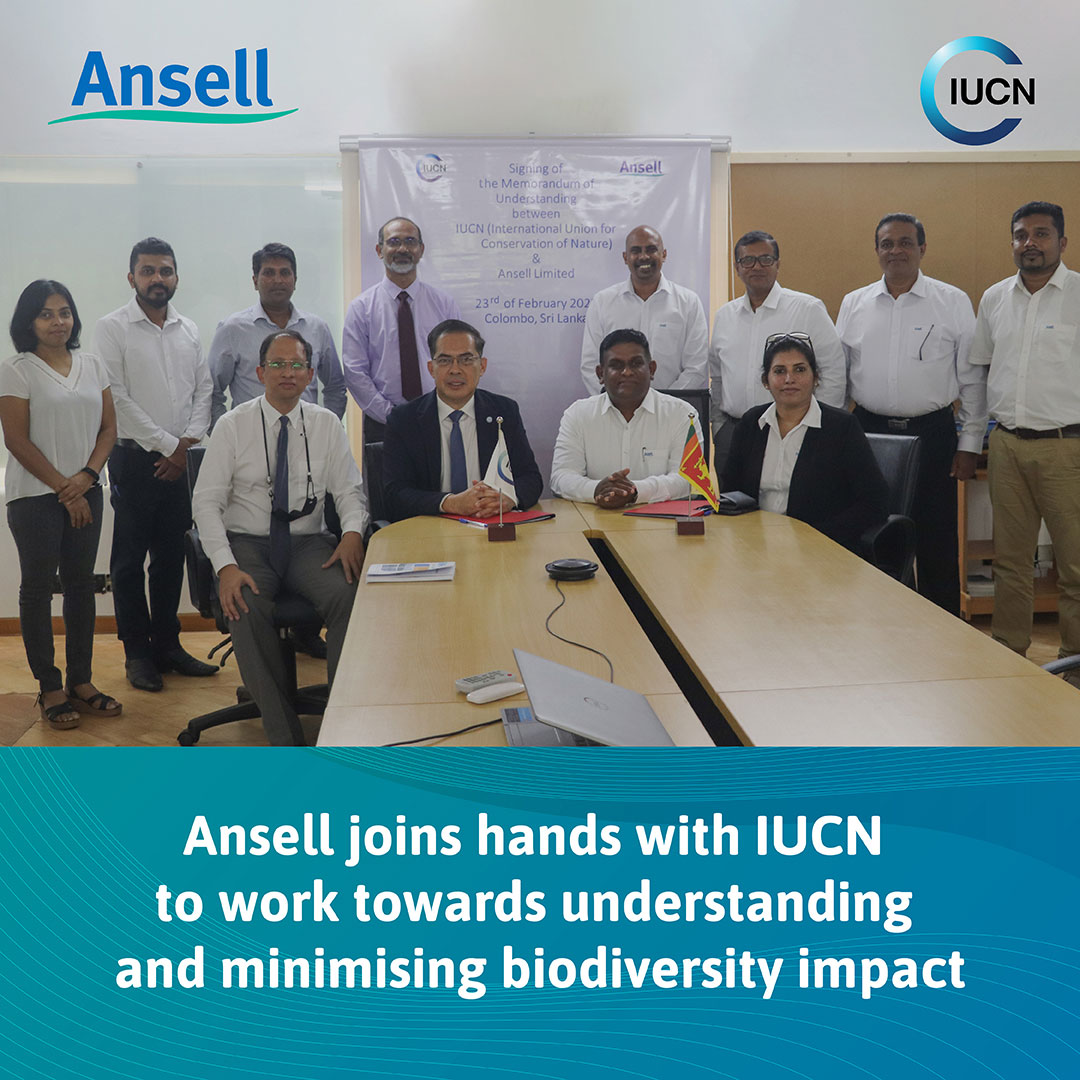
Colombo, Sri Lanka, 16 March 2023: Ansell Limited, a global leader in protection solutions, and IUCN (International Union for Conservation of Nature) signed a Memorandum of Understanding (MoU) on 23 February 2023, embarking on critical work to map out a pathway for Ansell to develop a strategic management approach to its biodiversity footprint. Ansell has already […]

5 Concerning Effects of Biodiversity Loss

The Anthropocene refers to humanity’s most recent and ecologically destructive period – perhaps starting around the time of the Industrial Revolution. Although the term hasn’t been officially adopted by The International Union of Geological Sciences, many specialists agree that we are currently in the Sixth Mass Extinction. While Homo Sapiens is the only species capable of disrupting the entire planet’s biosphere, […]

Collaboration for Mount Kenya Forest Restoration

Located on Kenya’s highest mountain Mount Kenya, the Mount Kenya forest covers an area of approximately 1,420 square kilometers. The forest is a crucial catchment area, providing water and other essential ecosystem goods and services to adjacent communities and the country. Mount Kenya forest is a Key Biodiversity Area (KBA), and World Heritage Site, home […]